How to Actually Break In a Softball Glove (Without Ruining It)
Quick Answer: Break in a softball glove with repeated catches (a ball mallet or having someone throw to you), leather conditioner worked into the pocket, and by tying a ball into the pocket with rubber bands overnight repeatedly — not by microwaving, soaking in water, or baking, all of which damage the leather’s fiber structure.
The fast methods you’ll find online — microwave it, soak it, bake it in the oven — do soften a stiff glove quickly. They also break down the leather’s natural oils and fiber structure in ways that shorten the glove’s usable life significantly. The slower method is slower because it’s not damaging anything.

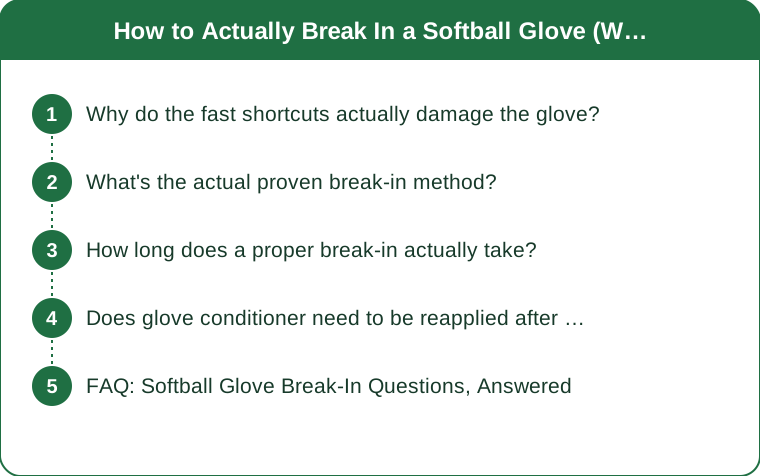
Why do the fast shortcuts actually damage the glove?
Leather is a natural fiber structure held together partly by its own natural oils. Heat from a microwave or oven accelerates moisture loss from those fibers unevenly, which can leave the leather brittle and prone to cracking within a season or two, even though it feels immediately softer right after.
Soaking in water has a similar problem in reverse — it swells the fibers, and as the glove dries (especially if dried near heat to speed things up), it often dries stiffer and more unevenly than before, not softer.
What’s the actual proven break-in method?
1. Condition the pocket with a leather conditioner made for glove leather (not general shoe leather conditioner, which can be too harsh) — work it in with your fingers, focusing on the pocket and hinge points.
2. Repeated catches. Nothing breaks in a glove like its actual job — playing catch, or using a glove mallet to simulate impact in the pocket, for short sessions daily rather than one long session.
3. Ball-and-band overnight. Place a ball in the pocket, fold the glove around it, and wrap with rubber bands or a glove wrap, left overnight. Repeat for 1-2 weeks. This gradually trains the leather to hold the pocket shape without forcing it all at once.

How long does a proper break-in actually take?
2-4 weeks of consistent light use for a glove to reach a genuinely broken-in feel, longer for stiffer, higher-end leather gloves that are built with more structure to begin with. This is noticeably slower than the microwave method’s near-instant softness — that’s the tradeoff for a glove that holds its shape and lasts multiple seasons instead of one.
A useful check: the glove should close smoothly around a ball with light hand pressure by the end of a proper break-in, without the leather feeling separately floppy in areas that weren’t specifically worked.
Does glove conditioner need to be reapplied after break-in?
Yes — light conditioning every few weeks during active season keeps leather from drying out with regular use and sun exposure, which is a different job than the initial break-in conditioning. Skipping ongoing conditioning is a common reason a well-broken-in glove starts stiffening up again mid-season.
Avoid over-conditioning too — too much oil can make leather overly soft and reduce the structure that helps the glove hold its pocket shape, so light and occasional beats frequent and heavy.
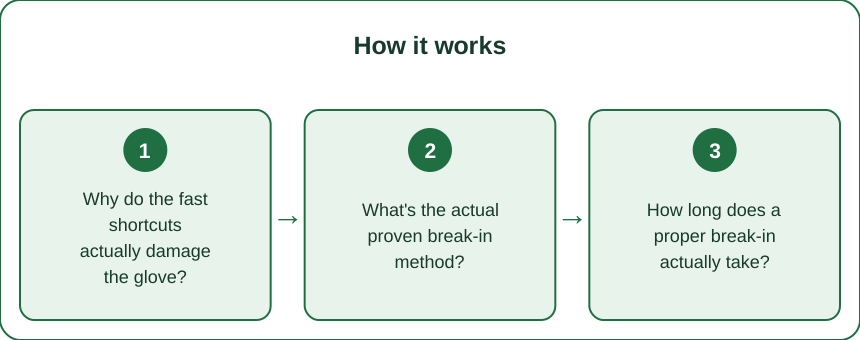
FAQ: Softball Glove Break-In Questions, Answered
Is it ever okay to use the microwave method for a cheap practice glove?
If it’s a low-cost glove you don’t expect to last multiple seasons anyway, the risk is lower-stakes — but for any glove you want to keep for a while, it’s not worth the shortcut.
What conditioner should I actually buy?
Look for products specifically labeled for baseball/softball glove leather rather than general leather conditioner — they’re formulated to soften without over-softening structural leather.
Can a glove be broken in too much?
Yes — over-conditioning or excessive forced break-in can leave a glove floppy and slow to snap back to pocket shape, which actually hurts fielding consistency. Balance is the goal, not maximum softness.
TL;DR:
- Skip microwave, oven, and water-soak shortcuts — they damage leather fiber structure
- Condition the pocket, play catch or use a mallet, then ball-and-band it overnight repeatedly
- Proper break-in takes 2-4 weeks — slower because it isn’t damaging the leather
- Keep conditioning lightly through the season; both too little and too much cause problems
The slow method takes longer for a reason — it’s building a glove that lasts seasons instead of softening one that won’t.
Keep Reading
This article is for general informational and styling purposes only. Fit, sizing, and product availability may vary.