Stop Putting Your Softball Glove in the Oven — Here's What Actually Breaks It In Safely
Quick Answer: Heat-based break-in methods (ovens, microwaves) dry out and crack leather fibers permanently — they just fake a fast break-in that costs you glove life. The safe method is playing catch daily plus light conditioner, which takes 1-2 weeks instead of one afternoon.
A fast internet trick promises a game-ready glove in an hour. What it doesn’t mention: baking leather strips natural oils out of the fibers, and a glove that feels broken in from heat often cracks at the seams within a season.

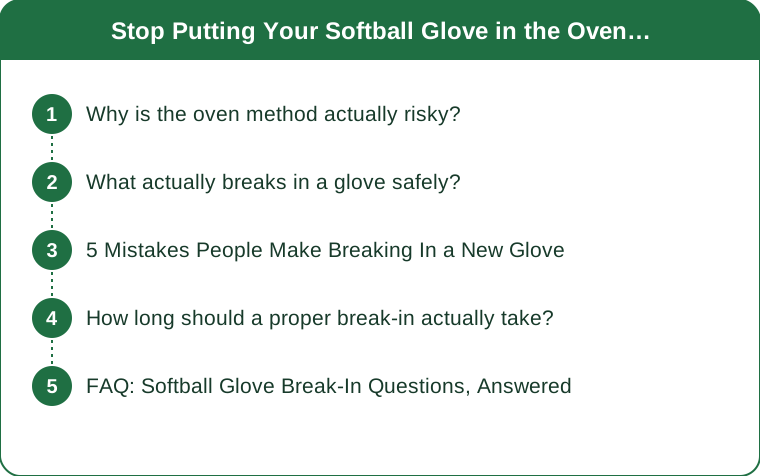
Why is the oven method actually risky?
Leather fibers hold natural oils that keep them flexible; sustained heat evaporates those oils faster than it softens the fibers, which is the opposite of what a proper break-in does.
The glove might feel pliable right after baking, but the fibers have been dried out, not conditioned — cracking typically shows up weeks later, not immediately, which is why the trick seems to “work” at first.
What actually breaks in a glove safely?
Repeated, gentle flexing under normal use — playing catch, closing the glove around a ball and tying it shut overnight, and light leather conditioner applied sparingly to the pocket and hinge points.
This takes 1-2 weeks of regular use rather than an afternoon, but the leather fibers soften through actual flex-and-recover cycles instead of losing their structure to heat.

5 Mistakes People Make Breaking In a New Glove
1. Using motor oil or heavy oils. These over-saturate leather and add unwanted weight — use a leather-specific glove conditioner only.
2. Soaking the glove in water. Water breaks down leather fibers even faster than heat and can warp the shape permanently.
3. Skipping the ball-and-tie method. Placing a ball in the pocket and wrapping the glove shut overnight trains the pocket shape far better than flexing alone.
4. Over-conditioning. More product isn’t faster — too much conditioner makes leather mushy and reduces ball control.
5. Ignoring the hinge points. The break-in that matters most is at the base of the fingers, not the pocket center — focus flexing there.
How long should a proper break-in actually take?
Expect 1-2 weeks of regular catch for a reasonable pocket to form, and a full season of game use before the glove feels fully “yours.”
That timeline is normal and expected — a glove that feels perfect on day one is often either pre-broken-in by the manufacturer or, if it’s brand new, a sign it may be undersized or a softer, lower-durability leather.
FAQ: Softball Glove Break-In Questions, Answered
Is any heat method ever safe for gloves?
A very brief, low warmth from a hair dryer on the lowest setting held at a distance is sometimes used to slightly soften stiff leather before conditioning — sustained oven heat is the specific risk, not warmth in general.
How often should I condition my glove during the season?
Once every few weeks during regular use is plenty — over-conditioning is a more common problem than under-conditioning.
Does a more expensive glove need less break-in time?
Often yes, since premium leather is typically pre-treated and softer from the start, but it still benefits from the ball-and-tie method for pocket shaping.
TL;DR:
- Oven/heat methods dry out leather fibers and cause cracking weeks later
- Real break-in: daily catch, light conditioner, ball-and-tie overnight — 1-2 weeks
- Skip motor oil, soaking, and over-conditioning
- Focus flexing at the finger hinges, not just the pocket center
Give the glove its 1-2 weeks the slow way — it’ll outlast the oven-baked shortcut by seasons.
Keep Reading
This article is for general informational and styling purposes only. Fit, sizing, and product availability may vary.