Hitting Basics: The Swing Fundamentals That Turn At-Bats Into Base Hits
Hitting a softball is famously hard and famously teachable — the swing being a ground-up sequence, the timing being trainable, and the rec player who understands both outproducing the stronger one who doesn’t. The hitting guide: the swing, the timing and the solo practice.
The Swing Sequence
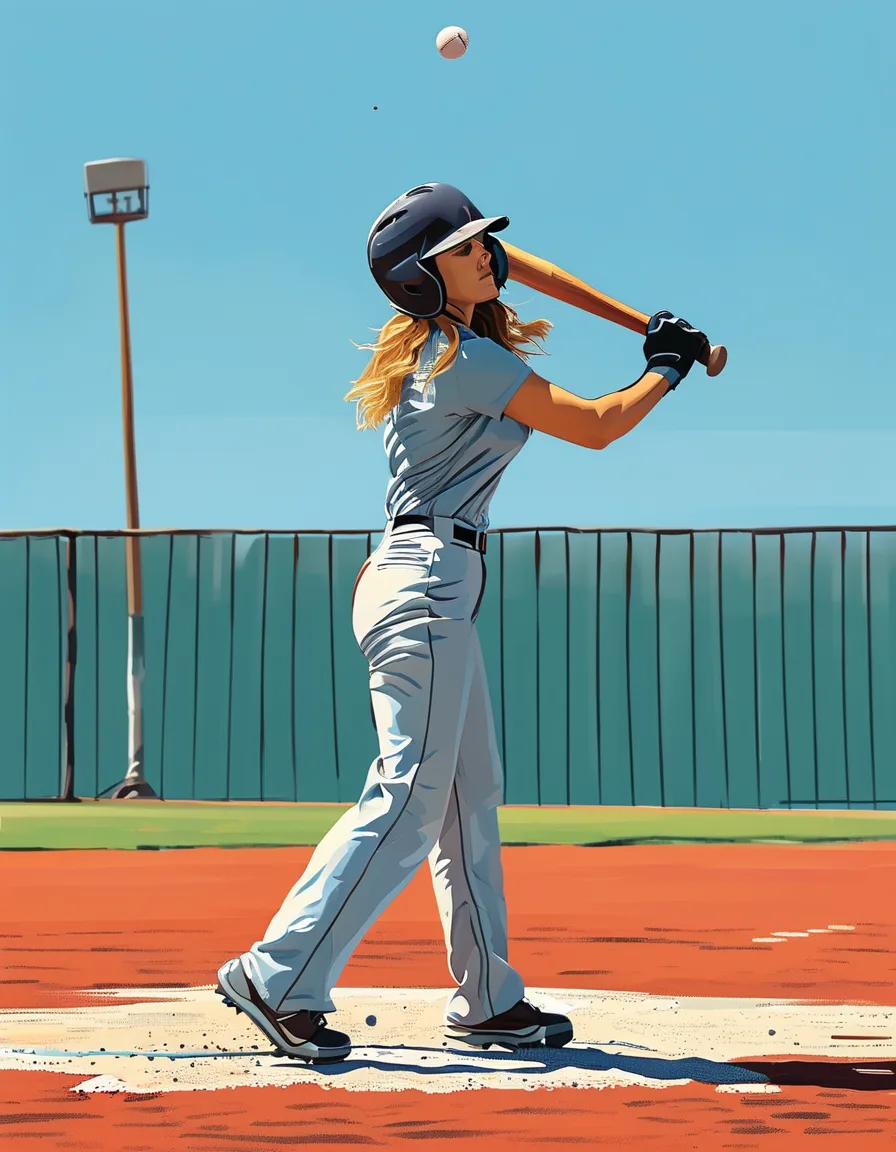
Built from the ground: the stance foundation (the athletic base — the feet just past shoulder width, the weight balanced-slightly-back; the comfortable-repeatable beating the imitation of anyone), the load-and-stride (the small weight shift back as the pitcher releases — the soft stride forward; the timing trigger, not a lunge), the hips-first law (the rotation leading — the hips firing before the hands; the power sequence from the rotation doctrine: the ground-hips-torso-hands chain; the arm-swing being the weak-contact factory), the hands-and-bat-path (the hands inside the ball — the short, direct path to contact; the level-through-the-zone swing over the uppercut-or-chop), the contact-point craft (the ball met slightly out front — the extension through, not at, the ball), the head discipline (the eyes ON the contact point — the head still while everything rotates per the vision doctrine; the pulling-off-the-ball being the whiff’s usual cause), and the balanced finish (the follow-through complete with the body in control — the fall-away swing diagnosing the earlier fault).

The Timing-and-Eye Training
Seeing and syncing: the slow-pitch timing reality (the arc pitch demanding PATIENCE — the wait-wait-swing rhythm; the early swing being rec softball’s universal error; the ball tracked to the top of its arc, attacked on the descent), the load-timing anchor (the load synced to the release — the rhythm rehearsed on every pitch, swung or not; the at-bat spent in rhythm even while taking), the pitch selection (the strike-zone discipline — the hittable-pitch patience per the selection doctrine; the swinging at bad arcs being the easy out you hand over), the tracking drills (the take-pitches practice — the balls watched all the way to the catcher; the eye trained without swinging), the two-strike adjustment (the choke-and-shorten approach — the contact-over-power concession that beats the strikeout), and the confidence loop (the timing clicking in practice before games — the batting-practice groove transferring per the rehearsal doctrine).
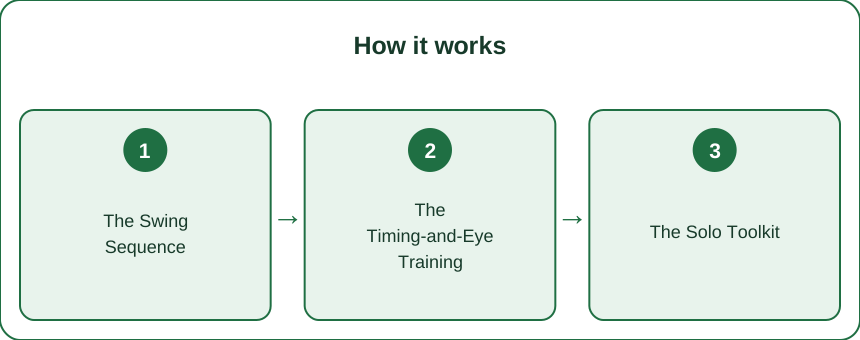
The Solo Toolkit
Practice without a pitcher: the tee work foundation (the batting tee being the swing’s laboratory — the contact-point moved around the zone; the fifty tee swings beating twenty live ones for mechanics per the skill doctrine; the DIY-tee and net options at home scale), the soft-toss variations (the partner’s angled tosses — the underhand feed that isolates timing; the family-member recruitment per the family doctrine), the dry-swing reps (the mirror swings in slow motion — the sequence rehearsed: the hips-then-hands checkpoints; the ten nightly swings per the habit doctrine), the video feedback (the side-angle swing film — the hip-lead and head-still checks against the sequence per the form doctrine), the strength support (the rotation power from the core doctrine — the medicine-ball throws and the single-leg stability from the leg doctrine feeding the swing), the cage sessions (the batting-cage timing tune-ups — the arc machines where available; the pre-season cage ritual), and the closing frame (the base hits being sequence-plus-patience — the swing built on the tee, the timing built on takes; the at-bat entered with a plan; the rec-league pitcher, suddenly hittable). Hips before hands, wait for the descent, fifty tee swings a week: the hits, fundamentally built.
The swing is a ground-up chain — hips fire before hands, eyes stay on contact, finish balanced — and slow-pitch timing is patience: track the arc to its top, attack the descent; swinging early is the universal rec error. Fifty weekly tee swings beat twenty live ones for building the sequence.
Keep Reading
This article is for general informational and styling purposes only. Fit, sizing, and product availability may vary.